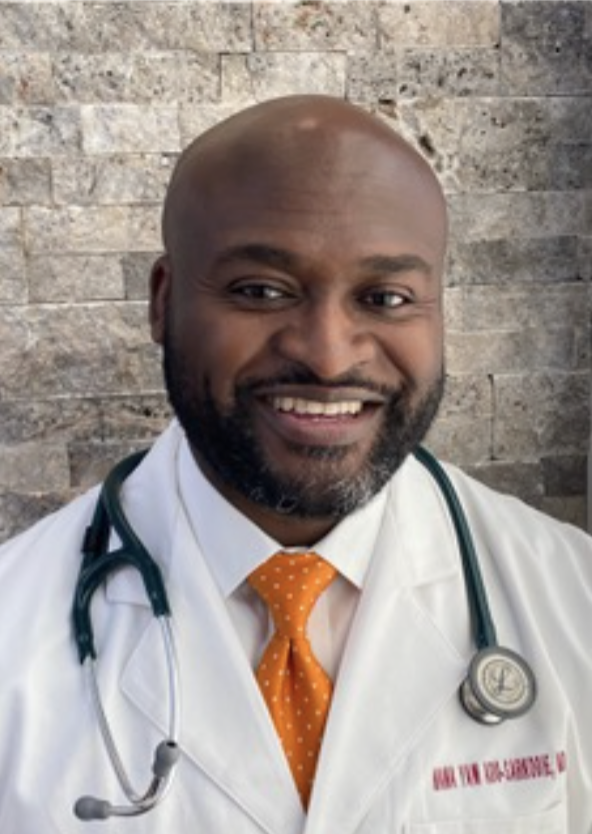
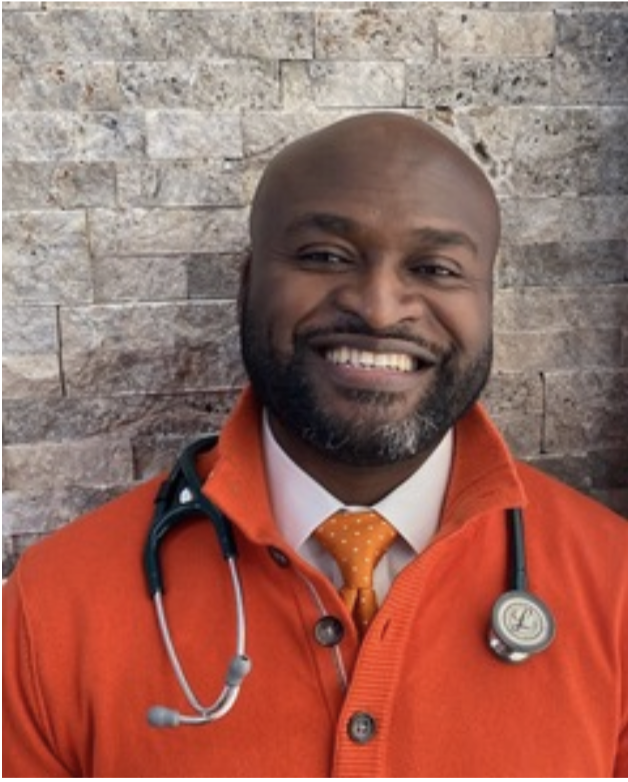
Dr. Nana Yaw Adu-Sarkodie, MD, MPH
MEET

Dr. Nana Yaw Adu-Sarkodie, MD, MPH

You don’t need another person talking over your head. You need someone who can help make sense of what’s happening.

The Childhood Question

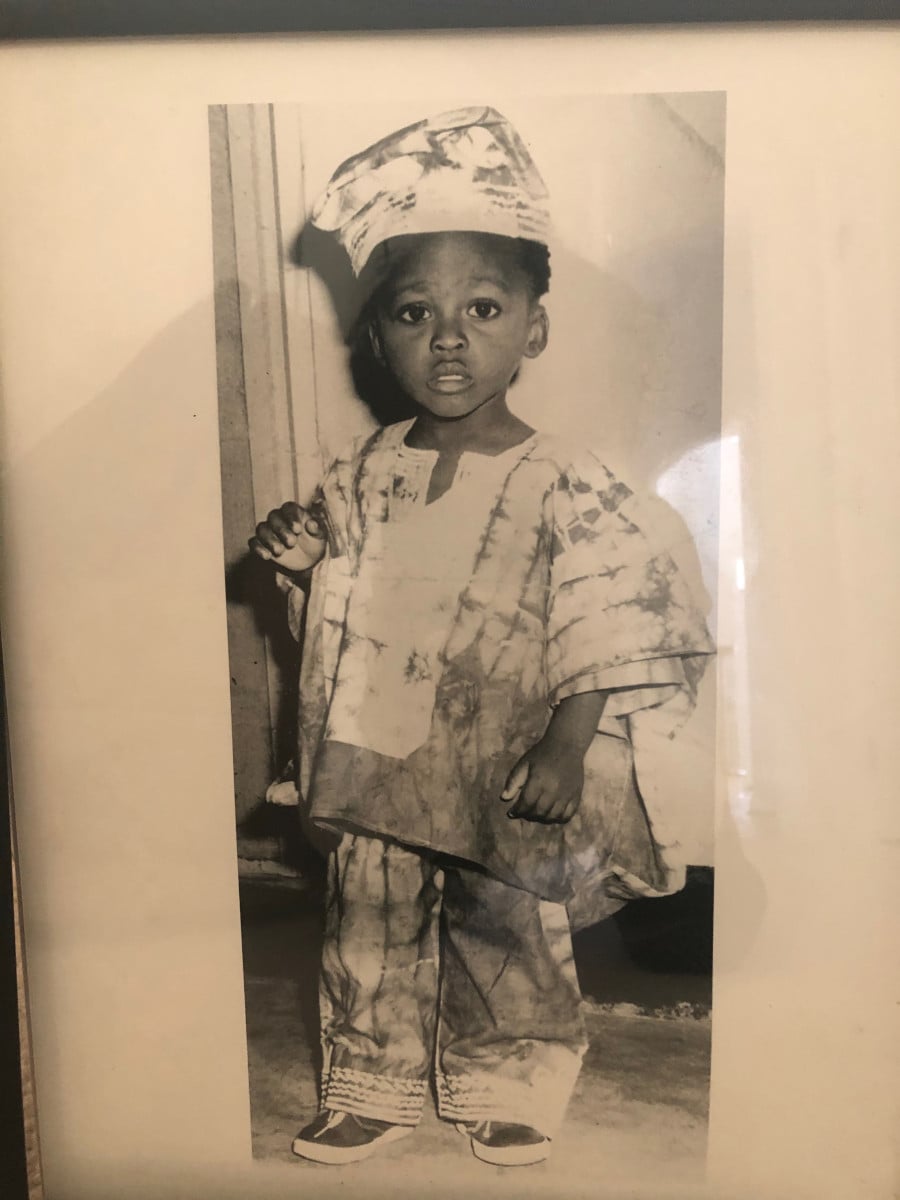
Dr. Nana Yaw Adu-Sarkodie has wanted to be a doctor since he was three years old.

What began as a childhood dream became a career centered on a question that has stayed with him:

How can we help people grow older without allowing aging to take away their dignity, voice, or sense of who they are?

As he explored medicine, he became particularly interested in older adults — a population he found too often misunderstood and whose needs extend far beyond what happens in a doctor’s office.

That interest led him to geriatric medicine.

What Exactly Is a Geriatrician?

If  this particular discipline in Family Medicine is new to you, you are not alone.

A geriatrician is a physician who specializes in caring for older adults. But Geriatric medicine isn’t simply about treating diseases that happen later in life.

In other words: a Geriatrician doesn’t just ask, “What disease does this person have?” They ask, “How is this person living — and what can we do to help them live as well as possible?”

Dr. Adu-Sarkodie brings more than 15 years of clinical experience in geriatric syndromes, dementia care, palliative and end-of-life care, and healthcare team coordination.

A Geriatrician looks at the whole picture:

  • What is happening with someone’s health?
  • How are they functioning day to day?
  • Can they still do the things that matter to them?
  • Are medications helping — or creating new problems?
  • Has memory or thinking changed?
  • Are they at risk of falling?
  • What support does the person need?
  • What does the family need to understand?
  • How can we preserve independence and quality of life?
  • What matters most to the person as they age?

His Office Isn’t Always an Office

One of the things that makes Dr. Adu-Sarkodie’s approach particularly personal is that his current practice includes caring for older adults in their homes.

You can see what home actually looks like: the medication bottles on the kitchen counter, the stairs, the refrigerator, the way someone moves from one room to another, the family member quietly doing most of the work — the things that never make it into a traditional exam-room conversation.

Home-based care changes what a physician gets to see. You don’t just hear:

“I’m having trouble managing at home.”

Dr. Adu-Sarkodie believes these details can help better understand and appreciate each person’s unique journey.

Dr. Nana Yaw Adu-Sarkodie, MD, MPH

Sometimes Caring Means Doing More Than Medicine

While Dr. Adu-Sarkodie is known for doing whatever is needed during a visit to care for his patients and understand their lives — including making grits, doing the dishes, he believes working alongside individuals and families to strategize and explore all aspects about care is the key.

Those moments are not about just providing extra support, they’re about something deeper: being willing to meet people where they are.

If making breakfast helps him understand whether someone is eating. If doing the dishes helps him see how difficult household tasks have become. If sitting at the kitchen table helps a family finally talk honestly about what is happening — then the visit has become more than an examination. It has become an opportunity to understand the person in the context of their actual life.

Because Aging Should Not Rob You of Your Dignity

This is at the heart of Dr. Adu-Sarkodie’s philosophy.

Getting older may mean that some things change. You may move differently. You may need help with certain tasks. You may need more support from family. You may experience changes in memory or function.

But needing help should not mean losing your voice. Needing care should not mean losing your identity.

And aging should not mean being treated as though the person you have always been no longer matters.

Dr. Adu-Sarkodie believes in normalizing aging and having thoughtful conversations about frailty, decline, and end-of-life care while maintaining clarity, dignity, and confidence for patients and families.

Meet Your Guide

The Moments That Make This Work Personal

Some of the most meaningful moments in caring for older adults happen during transitions.

The moment a daughter realizes:

“Mom doesn’t recognize me anymore.”

The moment an older adult quietly notices:

“Something is different. I can’t do what I used to do.”

The moment a spouse realizes:

“I’m becoming a caregiver.”

Or the moment a family sits around the kitchen table after a hospitalization, asking:

“What are we supposed to do now?”

These moments can be frightening. But they don’t have to be faced with confusion alone.

Dr. Adu-Sarkodie finds purpose in helping people and families make sense of these transitions — not by taking over, but by helping them understand what is happening and think through what comes next.

He Sees More Than the Medical Problem

Dr. Adu-Sarkodie is a board-certified Family Medicine Physician and fellowship-trained Geriatrician. He currently serves as a Medical Director for a comprehensive medical and social care program for older adults in Baltimore, where he leads a care team of various health professionals in support of aging in place caring for medically complex older adults and supporting aging in place. Previously, he served as Deputy Director for Geriatrics and Extended Care at the VA Maryland Health Care System.

His work spans:

  • Home-based primary care
  • Community-based care
  • Outpatient medicine
  • Long-term care
  • Dementia care
  • Frailty and functional decline
  • Hospice and palliative care
  • Interdisciplinary care coordination

HOW THIS MAY FIT YOUR JOURNEY

He understands what aging looks like inside the healthcare system — and inside someone’s home.

YM Health Solutions Understands Families

He Understands the Family, Too

Aging rarely affects only one person. An older adult may be the person receiving care, but there may also be:

  • A daughter coordinating appointments
  • A spouse managing medications
  • A son trying to understand what changed
  • A sibling who lives three states away
  • A friend helping with groceries
  • A caregiver quietly becoming exhausted


Dr. Adu-Sarkodie’s work includes supporting both older adults and caregivers as they navigate complex medical and social needs.

WHAT THAT MEANS FOR YOU

He understands that caregiving is part of the aging story, too.

He Understands That Health Is Bigger Than Medicine

Dr. Adu-Sarkodie holds an MPH in Population and Family Health from Columbia University’s Mailman School of Public Health. His public health perspective focuses on health disparities, social determinants of health, prevention, health literacy, and culturally responsive care.

He understands that sometimes the barrier isn’t knowing what the medical recommendation is.

It may be:

  • Can I afford it?
  • Can I get there?
  • Who is going to help me?
  • Does my family understand?
  • Can I actually manage this at home?
  • How do I navigate the system?

Those questions matter.

WHAT WE COVER
WHAT WE COVER
Aya Fern

A Physician Who Is Also a Teacher

Dr. Adu-Sarkodie believes people shouldn’t need a medical degree to understand what is happening to themselves or someone they love. His goal is not to overwhelm people with terminology — it is to help turn complicated information into something people can actually use.

WHAT THAT MEANS FOR YOU

You can ask:

“Can you explain that another way?”

“What does that actually mean?”

“What should I be paying attention to?”

“What should I ask next?”

And those questions are welcome.

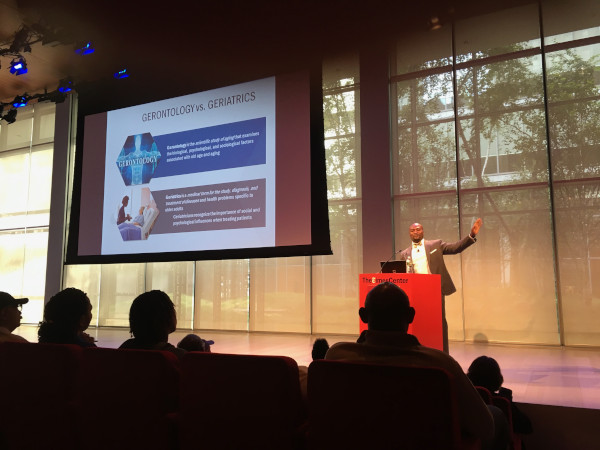
Dr. Yaw presenting definition of geriatrics NY

The Person Behind the Physician

Dr. Adu-Sarkodie is a children’s book author, photographer, cook, science-fiction enthusiast, and avid comic-book collector. His first children’s book, In the City, was inspired by fatherhood and raising his two daughters. His recently published children’s book Help for Grammy explores how a child experiences and understands a loved one’s dementia. He has also contributed health, aging, and community-wellness perspectives to numerous boards and organizations related to older adults, including the National Medical Association and the Student National Medical Association, and has worked with numerous medical schools and health professional associations.

His creative interests reflect something important about his approach: he remains curious — about medicine, about people, about stories, about what makes someone who they are, this curiosity is part of how he approaches aging.

Aging Navigation Circle logo

Why Aging Navigation Circle?

After years of caring for older adults and families, Dr. Adu-Sarkodie saw a gap. People had physicians. They had appointments. They had information. They had access to the internet. And yet they still found themselves asking:
  • “What does this mean?”
  • “What should I expect?”
  • “What should I ask?”
  • “How do I help?”
  • “What happens next?”
Aging Navigation Circle grew from that experience. It brings physician expertise into a space where people can learn about aging before they are forced to figure everything out during a crisis. Think of the Circle as a trusted thought partner. We aren’t here to tell you, “Here’s what you must do.” We’re here to help you explore: What’s changing? What might come next? What should I notice? What should I prepare for? What questions should I ask? Where can I turn for trustworthy help? The Circle is educational — not a substitute for individualized medical care. But it can help you become better prepared for the conversations and decisions that belong with your healthcare team and your family.

His Philosophy Is Simple

Aging should not rob you of dignity. It should not erase your voice. It should not erase your choices. It should not make you feel like a problem to be managed. And it should not leave families feeling like they have to figure everything out alone.

Sometimes preserving dignity means managing a complex medical condition. Sometimes it means helping someone remain at home. Sometimes it means slowing down enough to listen. And sometimes it might mean making the grits, doing the dishes, sitting at the kitchen table, and figuring out together what needs to happen next.

That’s the kind of medicine Dr. Adu-Sarkodie believes in.

You don’t have to know everything about aging. Rather, when it comes to aging you could use someone who can help you make sense of what’s happening — someone who understands the medicine, someone who understands the system, someone who understands the family, and someone who remembers that behind every diagnosis is a person whose dignity still matters.

Meet your thought partner for this stage of life.

Learn. Prepare. Navigate.

This Adinkra symbol is called Aya, is represented by the fern.

Adinkra symbols originate among the Akan peoples of Ghana and are also found in neighboring Côte d’Ivoire. These symbols traditionally express way of life, values, wisdom, and principles reflecting important lessons about life.

Aya symbolizes endurance, resourcefulness, and defiance in the face of hardship. Just as the fern plant thrives in difficult terrain, Aya represents the strength and adaptability needed to withstand life’s uncertainties and challenges.

The symbol reminds us that even in difficult circumstances, we can draw on our inner strength, adapt, and keep moving forward with resilience.